Thursday, 12 December 2013

Gunnera winter protection

A couple of my favorite foliage plants at Dixter are the Gunneras. Individual leaves can grow as big as 1-2 m (3-6ft) across! They prefer growing in wet soils, and are quite happy at water's edge, which is where they're found here. The slightly smaller leaved Gunnera tinctoria is growing on the bank of the Horse Pond, while the larger leaved Gunnera manicata grows around the boggy Lower Moat.  

Horse Pond before (August)


  Horse Pond after

Being native to South America, Gunneras require some winter protection in colder climates, such as the UK. Not only are the leaves aesthetically pleasing; they are also quite useful for protecting the crowns of the plant. Although I've seen this done at gardens in the past, this was the first time I've actually done it. 

Lower Moat after we finished

First, we cut the leaves off right at the crown of the plant. Then, we removed and composted most of the leaf stalk, which can reach 1.5-2.5m (4.5-7.5ft). Finally, we covered all the individual plant crowns by turning the leaves upside-down, and layering them in an interlocking fashion to hold them together.  

Resourcefulness at its best

We also cut pegs from old branches, which we used to anchor some of the smallest leaves, to keep them from blowing away during the winter.  

Friday, 6 December 2013

Plant of Interest

Crataegus ellwangeriana

Family: ROSACEAE

Origin: USA

Size: 6 m (18ft) x 6m (18ft) 

Flowers: white-pink, May

Fruit: Sept-Nov, bright red, 15mm (1/2 in), edible

Cultivation: Can be grown in a range of soil types. Prefers full sun-pt shade (fruits best in full sun). Hardy to zone 5 (USA). 

Observations: (As seen at Great Dixter) One of the showiest Hawthorns I've seen in the landscape. Fruit can attractively persist for 3 months in Autumn! Small, well-rounded specimen, suitable for wide variety of gardens. Not commonly used, but lots of potential. 


Tuesday, 3 December 2013

The Christmas Fair


Last weekend was our annual Christmas Fair. Having been closed now for a month, this is a unique opportunity to come and see the house and gardens. Not only that, but parts of the house that aren't normally open to the public, are accessible during the fair.  Inside, booths were set up in the Great Hall and the Yeoman’s Hall, where fires were crackling in the fire places, and local vendors were selling everything from art and crafts to clothing or food. 

Visitors shopping in the Great Hall

Outside, we had a booth, where we were selling some of our favorite bulbs and plants, as well as some fresh vegetables. In the Great Barn, there was a variety of homemade cakes and coffee, tea and special seasonal drinks, while sausages were being grilled on the barbecue outside the barn. 

The Great Barn

It was nice to have warm drinks on a cold day

It's a really fun atmosphere. There was a little something for everyone, and it was great to see people of all ages enjoying themselves. 

Even the kids liked Simon's woodwork


Saturday, 30 November 2013

Ready or not...

...Winter is coming! Daylight is getting shorter and temperatures are getting colder. It's always a bit of an adjustment for me, but I do appreciate the change in seasons and the often-underrated winter garden. 

By now, we've been able to lift and process most of the Dahlias, Cannas and other tender material inside for the winter. We have also wrapped all the Musa basjoo (Banana) and the Dicksonia antarctica (Tree Fern) in the Exotic Garden. Using bamboo canes and twine to create a support structure, we densely pack straw and fern fronds around the trunks to protect them from the winter cold. This light and airy material allows the plants to breathe, without trapping too much moisture, which could rot the plants. 


Tight packing will be more protective and stable 


Completed insulation

We leave the foliage intact to maximize food and energy production and storage. Eventually, the foliage will die back and only the main stalk will remain. The straw will be removed next season as new leaves begin to emerge, and the threat of cold is passing. Additionally, since the main trunks are not cut, we will have larger plants next season.


Tuesday, 19 November 2013

Spring Bedding and Bulbs

It's been a wet last couple weeks, but that hasn't kept us out of the garden. Fergus has devised systems for everything, including planting in the rain! Lately, we've been busy tidying the garden and making way for the spring bedding and bulbs. Last week, this coincided with "The Art of Gardening" Symposium (http://www.greatdixter.co.uk/whats-on/events/nov14-symposium/). The symposium group (from America) was here for 1 week, during which time they received thorough information on the start-to-finish bedding and bulb implementation process. In addition to daily lectures with Fergus, they spent quite a bit of time in the garden, watching us arrange and plant bedding areas, before eventually doing some gardening themselves! It was a lot of fun getting to know and work with them in the garden during the week.

Fergus demonstrates proper spacing and planting for the group

The first bedding project I worked on (with Ed) was the Circular Steps planting. The summer planting had already been lifted and the bed prepared. As with all planting projects in the garden, we put down boards to work off of. Boards are used for several reasons: to protect the beds from significant compaction, to protect the surrounding pathways or turf, and to keep the work space more tidy. Additionally, using boards allows us to work in a variety of spaces and weather (even when it's wet—this is good, since we've been having so much rain). The planting scheme was simply Myosotis sylvatica with Tulipa 'Combat' running through it. Although a somewhat straightforward palette, the planting technique and density are vital for a successful spring show.

Preparing to plant the Circular Steps 

Before 

After

After that, we moved to the Barn Garden, where we spent most of the week. There are several bedding pockets in the Barn Garden, which we had to clear and prepare before we could plant. Some areas had Dahlias that needed to be lifted. They were then cut back and the tubers placed as like-kinds in Styrofoam boxes, surrounded by just enough soil to keep them from drying out too much. Finally, they were labeled and placed in the cellar for the winter. There were other areas that required perennial cut-backs and the removal of select self-sowers and annuals. When we cut back spent perennials, we use bamboo canes to mark and outline groups of like-plants, so we know what is where until they reemerge next season. Once we've finished tidying an area, we often run a sweep of bulbs through the bed, either as a new addition, or to reinforce an existing bulb planting. We also use canes to mark out bulb plantings; again, this is so we can come back and know what's where until they emerge. By cutting back and cleaning up the beds, we've also made way for bulbs that are beginning to emerge now, such as Galanthus sp.

Before 

After

One of the more technical bits Ed and I have done so far involved many details. We began by marking a group of emerging Arum creticum (which had been hidden until now by a Tagetes 'Cinnabar') with canes. This rare species is just poking out of the soil in preparation for its spring show. Then, after clearing the likes of Erigeron annuus, Rudbeckia 'Indian Summer' and the Tagetes 'Cinnabar', we needed to lift, cut back, and divide a large planting of Aconitum 'Kelmscott'. Ideally, this should be done every 2 to 3 years, to maintain fresh, well-flowering plants. We also amended the soil with mushroom compost and fine bark, since they prefer well-composted soil. In front of the Aconite we planted a bedding combination of Aquilegia 'Kansas' and Tulipa 'Red Shine'. It's a lot of work, but I'm looking forward to seeing all these bedding areas in the spring! 

Emerging Arum creticum 

Canes mark a group of cut back Phlox 

After completed bedding work in the Barn Garden


Sunday, 10 November 2013

Wisley

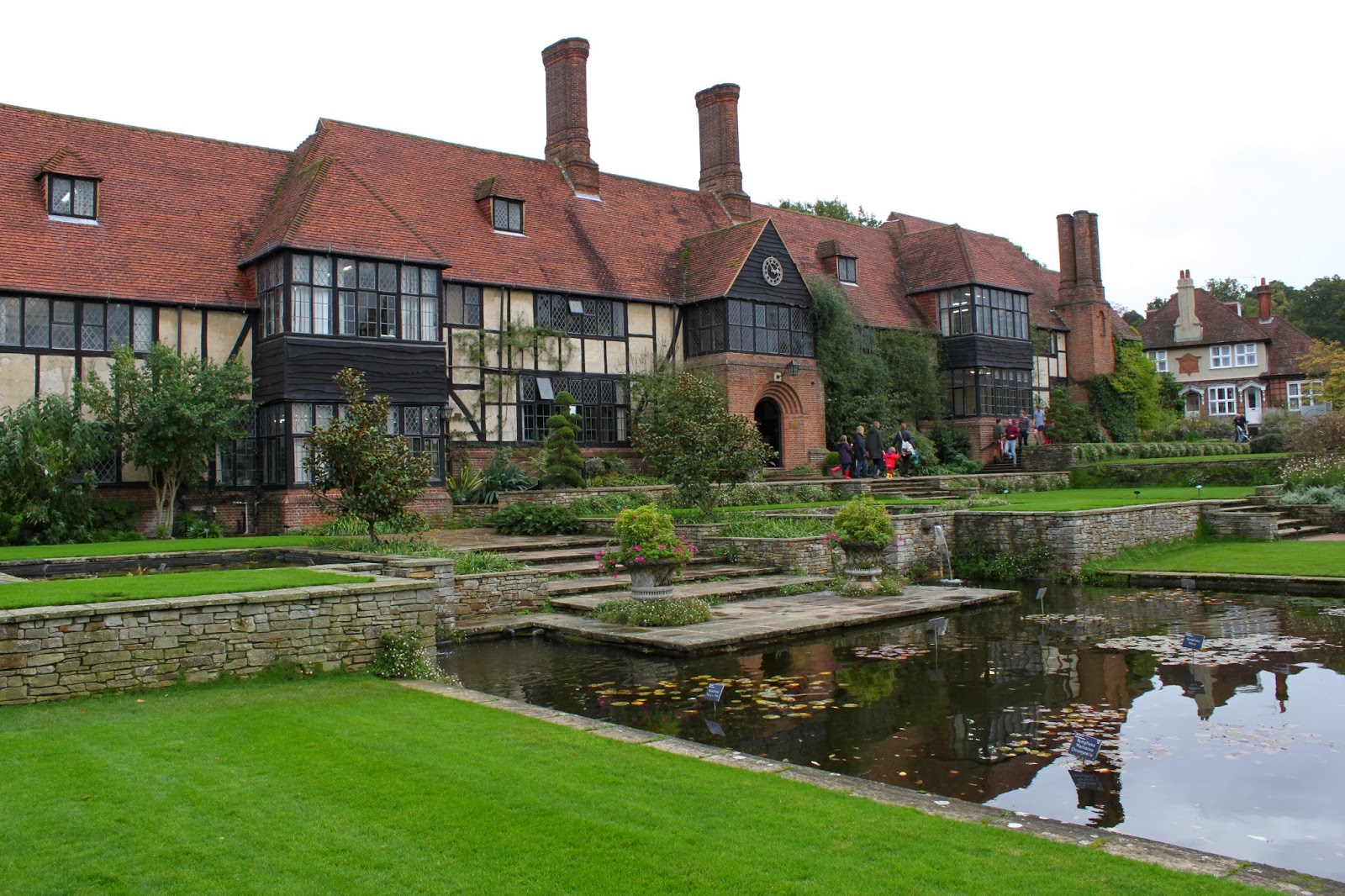
A few days ago, a group of us from Dixter had the opportunity to visit Wisley, one of Britain's most famous gardens. Wisley is the flagship garden of the Royal Horticulture Society (RHS) for a reason: it spans an impressive 170 plus acres (gardened) and showcases a wide variety of beautifully designed garden spaces, a cutting-edge glasshouse, an orchard, an arboretum, and trials field, among other things. They are also one of the leading gardens for horticulture education and science in the UK.  Wisley began on the principle of being an experimental garden, one that would help lead the way in the field of horticulture, and this is something they continue to strive towards to this day. 


Wonderful autumnal hues in the Glasshouse Borders designed by Piet Oudolf 

Unfortunately, it's a bit of a drive from Great Dixter, so we only had a 3 hour window to take it all in. I had the privilege of visiting Wisley in 2008, so although this visit was quick, I was able to prioritize. It was interesting to see things that have changed, or plantings that have grown in the last 5 years.


The Perennial Meadow has really filled in since I was last here

Some of my favorite spots are the Rock Garden & Alpine Houses, the Glasshouse Borders, the Perennial Meadow, and the Grass Gardens. 


The Alpine Houses

View through the Rock Garden

Lovely Grass Garden composition by the restaurant

Great fall color on this Acer palmatum 'Elegans'

The whole garden has a wonderful balance of informal and formal elements and is maintained meticulously. The plant combinations and horticultural practices are some of the best you'll see anywhere, which is why it's a world-renowned garden and one of the most visited gardens in the UK.

The classic architecture definitely contributes to Wisley's charm

The Canal and fountain

Saturday, 2 November 2013

See you next year!

As of last Sunday, the garden is officially closed (*The nursery is still open-- see website for schedule). It was a bit strange this week with no visitors walking around the garden. We enjoy and appreciate all the visitors who come through our gate during the season, but it's also nice to have this break in the action to get our big projects done.  


Just imagine Fergus as the starter at a race: he's been looking at his watch...now it's time: "On your marks…get set…GO!" That's how this week started. According to Fergus, the last month or so "we've just been sharpening our pencils." Now it's getting busy. We spent most of the week taking apart the Exotic Garden, the majority of which is comprised of tender plants, making it a priority as colder nights arrive.  Every year the Exotic Garden gets planted up fresh and then dismantled at the end of the season: cuttings taken, plants lifted and potted up, and everything put into cold frames or a greenhouse. 

It's begun! 

You would think Musa would have bigger root systems! 

A variety of plants waiting to be processed

This Cordyline australis is one of the larger plants that came out

I have been assigned the task of caring for the "Hot House", (also known as the "Begonia House") which, as you probably guessed, is heated (has heat benches) and contains Begonias. It's a significant learning curve for me, as I've never looked after a greenhouse before. About half of the contents are cuttings (lots of which came from the Exotic Garden), which are more tricky to manage than established plants. The most important variables are water, temperature, spacing and air circulation. As with most indoor plants, (especially during winter) you must be careful not to over-water, which is probably the greatest cause of plant loss in this scenario. Temperature can also be a bit tricky, especially when combined with air circulation. It's somewhat experimental since we have such a wide variety of plants in the same environment, but we're keeping the house around 14 C (about 58 F). However, with outdoor daytime temperatures still reaching 14-15 C, it can really cause the greenhouse temperature to spike. I have to diligently keep an eye on all these factors, and check the house several times a day. When the sun is out and the temperature warms up during the day, I will open the vents and turn on the fan to create some air flow, which guards against pests and diseases. While it's good to keep the air fresh and circulating, you don't want to over-ventilate and let the house get too cold. 

Cuttings on the heated bench

The Hot House is filling up fast! 

There are many details, which can be a bit overwhelming at first, but everything we're doing makes sense if you slow yourself down and process it. Like anything else, the more you do it, the more habitual it becomes, and ultimately habit becomes instinct.